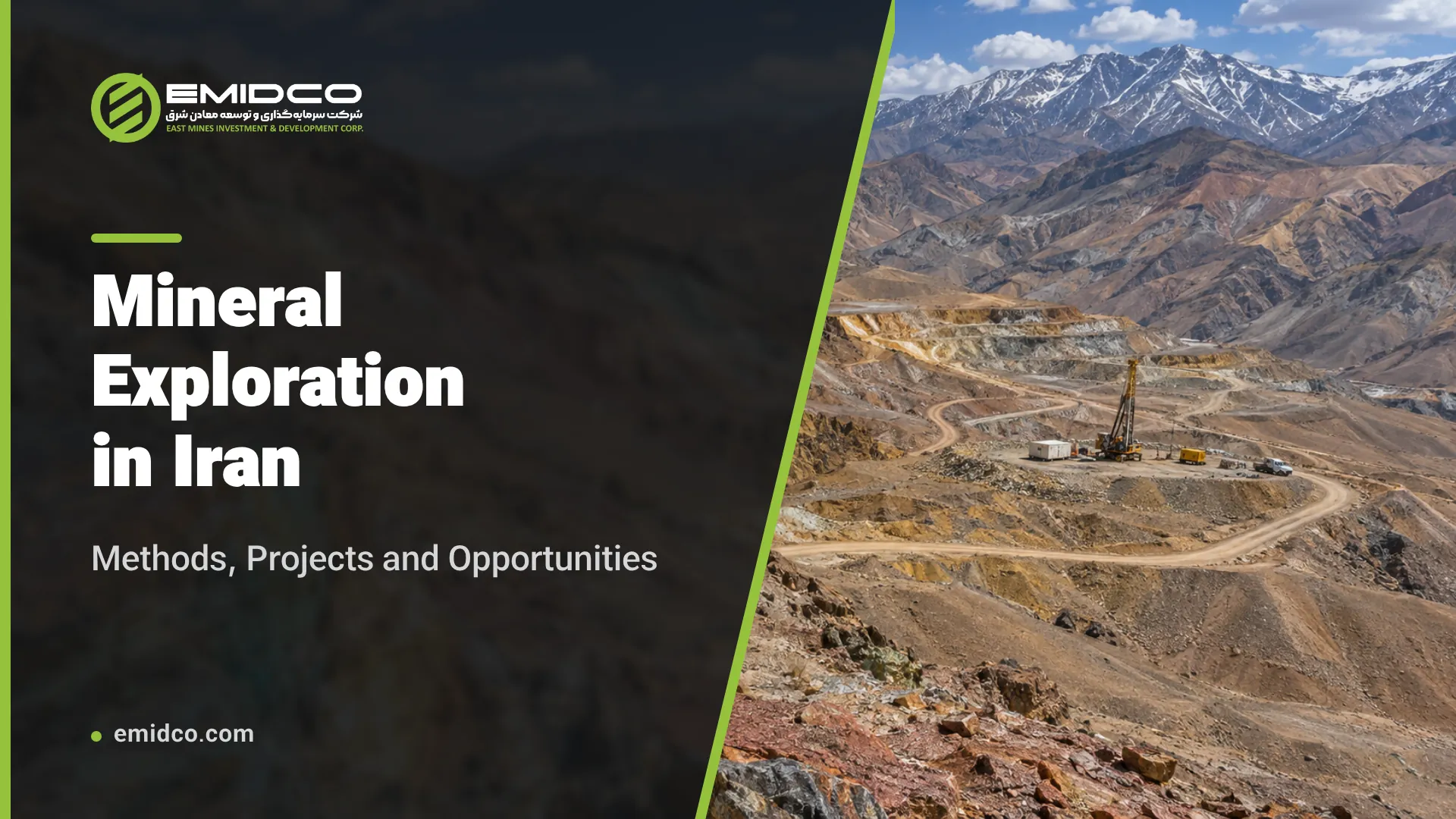
Iran is one of the mineral-rich countries in the Middle East, with a diverse geological setting that hosts a wide range of metallic and non-metallic mineral deposits. Its geological structures, magmatic activity, sedimentary formations, and mineralized belts have created favorable conditions for the occurrence of resources such as copper, iron ore, zinc, lead, gold, chromite, and industrial minerals.
Despite its established mining industry, significant opportunities remain for further mineral exploration across the country. New geological studies, improved exploration technologies, and the growing demand for strategic raw materials are increasing interest in Iran’s mineral potential.
However, mineral potential should not be confused with economically recoverable reserves. Identifying a promising geological area is only the starting point. Further investigation, technical evaluation, infrastructure planning, environmental considerations, and investment are necessary before a mineral project can become commercially viable.
This article examines mineral exploration in Iran, highlighting its geological potential, important mineralized regions, selected exploration developments, investment opportunities, and the main challenges facing the sector.
Why Is Iran Important for Mineral Exploration?
Iran occupies a significant position within the Alpine-Himalayan orogenic system and the broader Tethyan metallogenic domain. Its geological history includes several episodes of tectonic activity, magmatism, sedimentation, and mineralization.
These geological processes have contributed to the formation of different mineral deposit types across the country.
Iran’s Geological Potential and Mineral Industry Significance
Iran’s mineral sector is also supported by an established mining and processing industry. Copper, iron ore, zinc, lead, gold, and various industrial minerals supply domestic manufacturing and processing industries, while some mineral products are exported to international markets.
According to the U.S. Geological Survey’s country overview, Iran ranked among the world’s leading producers of several mineral commodities in 2024. It was the leading producer of strontium, the second-ranked producer of direct-reduced iron and mined gypsum, and the fifth-ranked producer of iron ore by iron content. These figures demonstrate the importance of the country’s existing mineral industry, although production rankings do not necessarily indicate the amount of undiscovered resources.
The mineral sector, excluding hydrocarbons, accounted for approximately 2% of Iran’s GDP in fiscal year 2024, covering March 21, 2024, to March 20, 2025. These characteristics make Iran an important country for geological investigation and mineral exploration, particularly in regions where established mining districts and less-explored geological areas exist alongside one another.
Geological Setting and Major Mineralized Regions of Iran
Iran’s mineral potential is closely related to its geological structure. Different geological zones contain distinct mineralization patterns, making regional geological understanding important when identifying areas for further exploration.
Some of the country’s most significant mineralized regions are associated with the Central Iranian zone, the Urumieh-Dokhtar magmatic belt, the Sanandaj-Sirjan zone, the Alborz region, and parts of eastern and southeastern Iran.
1- Central Iran
Central Iran is one of the country’s important geological and metallogenic regions. Its complex geological history and diverse rock formations have contributed to the occurrence of several metallic and industrial mineral deposits. The Bafq region in Yazd Province is particularly important because of its iron ore deposits and associated mineralization.
The wider Bafq-Saghand area has also attracted research interest beyond conventional iron ore exploration. A 2025 study published in the Journal of Asian Earth Sciences investigated the regional potential for rare earth elements associated with iron oxide-apatite mineralization in this province. This research highlights the importance of revisiting established mining districts to investigate mineral commodities that may have received less attention in earlier exploration programs.
2- Urumieh-Dokhtar Magmatic Belt
The Urumieh-Dokhtar magmatic belt is one of Iran’s most important geological regions for metallic mineral exploration, particularly copper. Its magmatic history has created favorable geological conditions for several types of copper mineralization, including porphyry, hydrothermal, and skarn-related deposits.
Important copper districts and deposits are associated with this broad geological belt, particularly in the Kerman region. The Sarcheshmeh copper complex is one of the best-known examples of Iran’s copper industry and demonstrates the economic importance of this mineralized region.
Research published in Ore Geology Reviews in December 2025 used geological and geospatial information to investigate copper prospectivity across Iran. The study identified several important copper mineralization regions and emphasized the role of geological structures, intrusive rocks, and geochemical characteristics in identifying prospective areas.
3- Sanandaj-Sirjan Zone
The Sanandaj-Sirjan zone extends through western and southwestern Iran and contains a complex geological history involving metamorphic, igneous, and tectonic processes. This geological diversity makes the region relevant to exploration for several metallic mineral commodities.
Recent research has also examined the potential for lithium-cesium-tantalum pegmatites in parts of the Sanandaj-Sirjan zone. Such studies are important because they broaden the scope of exploration beyond traditional commodities and help identify geological settings that may be relevant to emerging mineral supply chains.
4- Eastern and Southeastern Iran
Eastern and southeastern Iran contain several geological environments with potential for metallic and industrial mineral exploration. The region includes parts of the Lut block, eastern Iranian geological zones, and areas associated with complex tectonic and magmatic histories.
Copper, gold, chromite, and other mineral occurrences have been reported in different parts of this broad region. The diversity of geological settings means that exploration priorities must be established on a deposit-specific basis rather than assuming that the entire region has the same mineral potential.
5- Northwestern Iran
Northwestern Iran is another important area for mineral exploration, particularly because of its diverse geological formations and established mining activity. The Ahar-Arasbaran region in East Azerbaijan Province is associated with significant copper mineralization, including the Sungun copper deposit.
Other geological environments in the northwest are relevant to the investigation of iron, gold, industrial minerals, and selected strategic mineral commodities. The region’s existing mining infrastructure and industrial activity can provide advantages for certain exploration and development projects, although each project requires its own technical and economic assessment.
Major Mineral Commodities for Exploration in Iran
Iran’s exploration potential is not limited to a single mineral commodity.
Key Mineral Resources and Exploration Regions in Iran
Different geological regions offer opportunities for investigating both established industrial minerals and materials that have gained importance in modern manufacturing and energy technologies.
| Mineral commodity | Important exploration regions | Exploration significance |
|---|---|---|
| Copper | Kerman, Urumieh-Dokhtar belt, Ahar-Arasbaran | Established mining districts and potential for additional discoveries |
| Iron ore | Bafq, Central Iran, Kerman | Important for the domestic steel industry |
| Gold | Northwestern, eastern, and central Iran | Exploration potential in several geological settings |
| Lead and zinc | Malayer-Isfahan belt and other mineralized regions | Important for metal production and industrial applications |
| Chromite | Southeastern and eastern Iran | Relevant to metallurgical and industrial markets |
| Lithium | Ghahavand and selected geological environments | Emerging research interest in strategic minerals |
| Rare earth elements | Bafq-Saghand and selected granitic environments | Potential relevance to advanced technologies |
| Industrial minerals | Different sedimentary and volcanic regions | Applications in construction, ceramics, chemicals, and manufacturing |
The regions listed above represent areas of geological interest and known mineral occurrences. They should not be interpreted as proof that every location contains an economically viable deposit. The commercial potential of each target depends on geological evidence, mineral characteristics, extraction conditions, infrastructure, market demand, and environmental requirements.
Recent Research and Exploration Developments in Iran
Scientific research plays an important role in identifying new exploration targets and improving the understanding of known mineralized regions. Recent publications provide useful examples of how researchers are investigating both established mineral commodities and emerging strategic materials in Iran.
Copper Prospectivity Mapping Across Iran
A research paper published in Ore Geology Reviews in December 2025 examined copper prospectivity across Iran using an integrated geological and geospatial dataset. The study identified the importance of Paleogene-Neogene magmatism in the distribution of copper mineralization. It also highlighted the relationship between intrusive rocks, copper geochemical anomalies, and known mineral occurrences.
The research identified several important copper mineralization regions, including Arasbaran, Kerman, Saveh-Yazd, and eastern Iran. Its results demonstrate how regional geological information and data-driven analysis can help prioritize areas for further investigation.
However, prospectivity maps are exploration tools. A high-potential area does not automatically represent a confirmed mineral deposit or an economically recoverable resource.
Lithium Potential in the Ghahavand Plain
Lithium has attracted increasing attention because of its role in rechargeable batteries, energy storage systems, and other industrial applications. A study published in Scientific Reports on October 6, 2025, investigated lithium potential in the Ghahavand Plain in the Hamadan region of western Iran.
The researchers reported lithium concentrations ranging from 30 to 102 parts per million (ppm), with an average of 55.1 ppm in the studied sediments. Some samples from the northern part of the area contained higher concentrations, ranging from 71 to 102 ppm.
The study identified the area as a potentially promising location for future lithium exploration. It is important to interpret these findings carefully. The research identifies geological and geochemical indications that may justify further investigation; it does not establish a commercially viable lithium mine or prove the existence of an economically recoverable reserve.
Rare Earth Element Research in the Bafq-Saghand Region
The Bafq-Saghand mineralized province has long been recognized for its iron oxide-apatite deposits. More recent research has investigated the possibility of associated rare earth element mineralization in this region.
A study published in the Journal of Asian Earth Sciences in May 2025 examined regional-scale exploration targeting for rare earth elements associated with iron oxide-apatite mineralization. The research identified prospective areas associated with geological structures and deep faults, demonstrating the potential value of investigating additional mineral commodities within established mining districts.
Further research published online in October 2026 also examined rare earth minerals in the Zarigan Granite near the Chadormalu mining area, using multispectral and hyperspectral data. Together, these studies show how established mining regions can provide opportunities for investigating mineral systems beyond their traditionally recognized commodities.
Mineral Exploration Methods Used in Iran
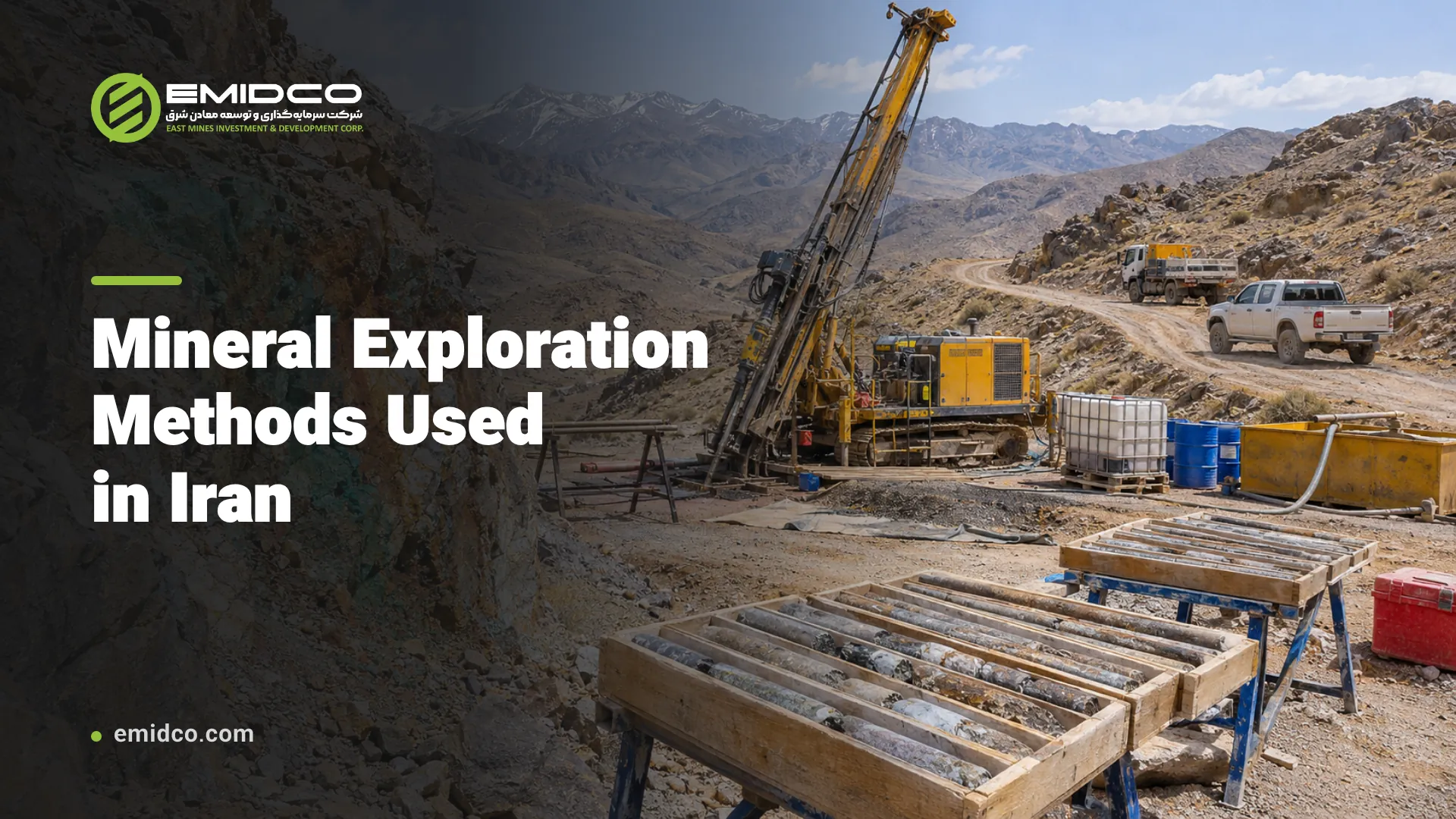
Mineral exploration in Iran involves the use of geological information, field investigations, scientific data, and modern technologies to identify areas with potential mineralization. The appropriate approach depends on the mineral commodity, geological environment, exploration objectives, and available information.
Key Techniques and Technologies in Mineral Exploration
At a general level, exploration programs may involve:
- Geological mapping and interpretation
- Geochemical investigation
- Geophysical surveys
- Satellite imagery and remote sensing
- Geographic information systems (GIS)
- Mineral prospectivity mapping
- Field verification and subsequent technical investigation
These approaches are often combined to improve the understanding of geological conditions and identify areas that deserve further attention. For example, regional copper exploration may benefit from integrating geological maps, information about intrusive rocks, structural features, and geochemical data.
Similarly, remote sensing and spectral analysis can help investigate mineral-related surface characteristics in selected geological environments. Modern exploration increasingly relies on combining different sources of information rather than using a single dataset to make decisions.
The selection and application of these techniques depend on the geological characteristics of each target. Detailed explanations of individual exploration methods and their technical applications require a separate discussion.
Opportunities for Mineral Exploration Investment in Iran
Iran’s mineral sector offers several areas of potential interest for exploration companies, mining investors, and industrial groups. However, investment opportunities should be evaluated based on project-specific evidence rather than broad national resource estimates.
1- Further Exploration in Established Mining Districts
Established mining districts may offer opportunities to investigate additional mineralization around known deposits and mining operations. Regions such as Kerman, Bafq, and Ahar-Arasbaran have existing geological knowledge and mining activity. This background may help reduce some early-stage information gaps, although new targets still require independent investigation.
2- Exploration for Strategic and Emerging Minerals
Global demand for materials used in batteries, electronics, renewable energy, and advanced manufacturing has increased interest in minerals such as lithium and rare earth elements. Iranian research into lithium in the Ghahavand Plain and rare earth elements in the Bafq-Saghand region illustrates how exploration priorities are expanding beyond traditional commodities.
These research activities may create opportunities for further geological investigation, but commercial development depends on the quality of the mineral occurrence, extraction technology, processing requirements, and market conditions.
3- Use of Geological Data and Modern Exploration Technologies
The integration of geological maps, geochemical information, remote sensing, and geospatial analysis can improve the efficiency of exploration programs. Data-driven approaches can help companies compare different areas, identify geological patterns, and prioritize targets for field investigation.
The growing use of digital geological information also creates opportunities for companies that can combine geological expertise with data analysis and modern exploration technologies.
4- Cooperation Between Exploration Companies and Mining Industries
Exploration requires technical expertise, financial resources, equipment, and long-term project planning. Cooperation between private exploration companies, mining operators, industrial groups, research institutions, and government organizations may help distribute project risks and improve access to technical capabilities.
Potential cooperation models include joint exploration programs, technical partnerships, investment agreements, and collaboration around specific mineralized areas. The structure of each partnership should be evaluated in relation to applicable laws, ownership arrangements, financing conditions, and project responsibilities.
5- Development of Less-Explored Geological Areas
Although Iran has several well-established mining districts, not all geological regions have been investigated to the same level of detail. Areas with limited geological coverage or incomplete exploration data may offer opportunities for further investigation. However, limited previous exploration should not automatically be interpreted as high mineral potential. New projects must be supported by geological evidence and a clear exploration rationale.
Main Challenges Facing Mineral Exploration in Iran
Despite its geological potential, mineral exploration in Iran faces several technical, economic, regulatory, and operational challenges. Understanding these constraints is essential when evaluating the attractiveness of an exploration project.
1- Access to Reliable Geological Information
The quality, coverage, and accessibility of geological information can influence exploration costs and project decisions. Incomplete or inconsistent datasets may increase uncertainty and require additional work before exploration targets can be properly evaluated. Improving access to reliable geological information is therefore important for both public-sector exploration programs and private investment.
2- Financing and Investment Requirements
Mineral exploration involves uncertainty and may require long periods of investment before commercial returns become possible. Companies must allocate capital to geological investigation, field activities, technical studies, and project management without a guarantee of discovery. Access to long-term financing is particularly important for projects that require extensive exploration or are located in areas with limited infrastructure.
3- Technology and Equipment Availability
Modern exploration depends on specialized equipment, analytical services, software, and technical expertise. Restrictions on international trade, financial transactions, or access to certain technologies may increase costs and complicate cooperation with international service providers. These issues can affect the speed, quality, and cost of exploration programs.
4- Infrastructure and Geographic Conditions
Some mineralized regions are located far from major industrial centers, transportation networks, power infrastructure, or water resources. Difficult terrain and remote locations can increase exploration and future development costs. Infrastructure availability should therefore be considered early when evaluating potential exploration projects.
5- Regulatory and Licensing Requirements
Mineral exploration and mining activities in Iran operate within a legal framework that includes the Mining Act and its amendments.
The Ministry of Industry, Mine and Trade oversees important aspects of the mineral sector, including the issuance of mining and quarrying permits.
Companies must understand the applicable licensing procedures, land access requirements, environmental obligations, and other legal responsibilities before undertaking exploration activities.
6- Environmental and Water-Related Considerations
Environmental management is an important part of responsible mineral exploration.
Water availability, land disturbance, biodiversity, waste management, and the proximity of exploration areas to settlements or protected environments may influence project planning.
In water-stressed regions, the availability of water and the potential effects of exploration and future mining activities require particular attention.
What Should Companies Consider Before Starting Mineral Exploration in Iran?
Companies considering exploration opportunities in Iran should evaluate more than the geological attractiveness of a target.
A structured assessment can help identify major uncertainties and prevent investment decisions based only on preliminary information.
Important considerations include
- Geological suitability: Determine whether the target area has geological characteristics consistent with the mineral commodity being investigated.
- Existing information: Review available geological maps, scientific publications, historical exploration records, and relevant public datasets.
- Licensing and legal conditions: Understand the applicable exploration rights, permit requirements, and regulatory responsibilities.
- Infrastructure: Evaluate access to roads, power, water, transportation, and technical services.
- Environmental conditions: Identify environmental sensitivities, water constraints, land-use issues, and potential community impacts.
- Market outlook: Consider the demand, price volatility, processing requirements, and potential customers for the target commodity.
- Financial capacity: Assess whether the company has sufficient capital and technical resources to support the project through the required stages.
- Project risks: Consider regulatory, operational, financial, technical, and geopolitical uncertainties before committing long-term capital.
A promising geological target is only one part of a successful exploration investment. The project’s wider operating environment and development requirements are equally important.
The Role of Government and Mining Organizations in Iran’s Exploration Sector
Government institutions and mining organizations play an important role in shaping mineral exploration activities in Iran.
The Ministry of Industry, Mine and Trade is responsible for overseeing important regulatory aspects of the mineral sector, including mining and quarrying permits.
The Iranian Mines and Mining Industries Development and Renovation Organization (IMIDRO) is another significant institution involved in the development of the country’s mining and mineral industries.
Its activities include supporting mineral exploration and the development of mining-related projects.
The Geological Survey and Mineral Exploration of Iran also contributes to the country’s geological knowledge through geological investigation, mapping, and mineral exploration-related activities.
Institutional Collaboration and Investment in Mineral Exploration
Coordination between these institutions, private exploration companies, mining operators, universities, and research organizations can support more effective use of geological information and exploration resources.
For the sector to attract sustainable investment, access to reliable information, transparent procedures, technical capacity, and predictable project conditions remain important.
Future Outlook for Mineral Exploration in Iran
The future of mineral exploration in Iran will depend on the country’s ability to combine its geological potential with investment, technology, reliable data, and effective project management. Traditional commodities such as copper, iron ore, lead, and zinc are expected to remain important because of their role in established industrial supply chains.
At the same time, growing interest in strategic materials such as lithium and rare earth elements may encourage further investigation of geological areas that have not previously received the same level of attention. Recent scientific studies demonstrate that new exploration opportunities can emerge from both regional-scale geological research and the reassessment of established mining districts.
Emerging Exploration Technologies and Future Challenges
Digital geological databases, geospatial analysis, remote sensing, and integrated exploration planning may also improve the way companies identify and prioritize potential targets. Nevertheless, the future development of the sector will depend on addressing financing constraints, technology access, infrastructure limitations, regulatory uncertainty, and environmental responsibilities.
Iran’s geological diversity provides a strong foundation for mineral exploration, but turning that potential into sustainable mining activity requires reliable evidence, careful project evaluation, and long-term investment.
Conclusion
Mineral exploration in Iran is supported by a diverse geological setting, established mining districts, and growing scientific interest in both traditional and strategic mineral commodities. Regions such as Kerman, Bafq-Saghand, Ahar-Arasbaran, and parts of the Urumieh-Dokhtar and Sanandaj-Sirjan geological zones remain important for understanding the country’s mineral potential.
Recent research into copper prospectivity, lithium-bearing sediments, and rare earth elements also demonstrates how exploration priorities are evolving. However, geological potential alone does not guarantee successful mineral development. Reliable information, suitable technology, financing, infrastructure, regulatory clarity, and responsible environmental management are all necessary to turn exploration opportunities into sustainable mining projects.
For Iran’s mineral sector, the most important opportunity lies not only in discovering additional mineral occurrences but also in improving the quality, efficiency, and long-term value of exploration activities.
FAQ
Why is Iran considered important for mineral exploration?
Iran has a diverse geological setting associated with the Alpine-Himalayan orogenic system and the Tethyan metallogenic domain. These geological conditions have contributed to the occurrence of copper, iron ore, gold, lead, zinc, chromite, and various industrial minerals.
Which regions of Iran are important for mineral exploration?
Important mineralized regions include Central Iran, the Urumieh-Dokhtar magmatic belt, the Sanandaj-Sirjan zone, the Bafq-Saghand area, Kerman, Ahar-Arasbaran, and parts of eastern and southeastern Iran. The exploration potential of each region depends on the target commodity and its geological characteristics.
What minerals are commonly explored in Iran?
Major exploration targets include copper, iron ore, gold, lead, zinc, and chromite. Industrial minerals are also important. Recent scientific research has increased interest in lithium and rare earth elements in selected geological environments.
Is there lithium exploration potential in Iran?
Scientific research published in 2025 investigated lithium-bearing sediments in the Ghahavand Plain in western Iran. The study identified elevated lithium concentrations in some samples and described the area as potentially promising for future exploration. However, these findings do not establish a commercially viable lithium deposit or an economically recoverable reserve.
Which organizations are involved in mineral exploration in Iran?
Important organizations include the Ministry of Industry, Mine and Trade, the Geological Survey and Mineral Exploration of Iran, and IMIDRO. Private exploration companies, mining operators, universities, and research institutions also contribute to exploration activities.
What are the main challenges of mineral exploration in Iran?
Major challenges include financing limitations, access to specialized equipment and technology, incomplete geological information in some areas, infrastructure constraints, regulatory requirements, environmental considerations, and geopolitical risks.
Does a mineral occurrence mean that a commercially viable mine exists?
No. A mineral occurrence indicates the presence of a mineral of interest, but it does not prove that the material can be extracted economically. Further technical, geological, environmental, and economic investigation is necessary before a mining project can be considered commercially viable.
Are there opportunities to explore rare earth elements in Iran?
Yes. Research has investigated rare earth element potential in areas such as the Bafq-Saghand mineralized province and the Zarigan Granite near the Chadormalu mining area. These studies provide geological evidence for further investigation, but additional work is needed before commercial conclusions can be drawn.