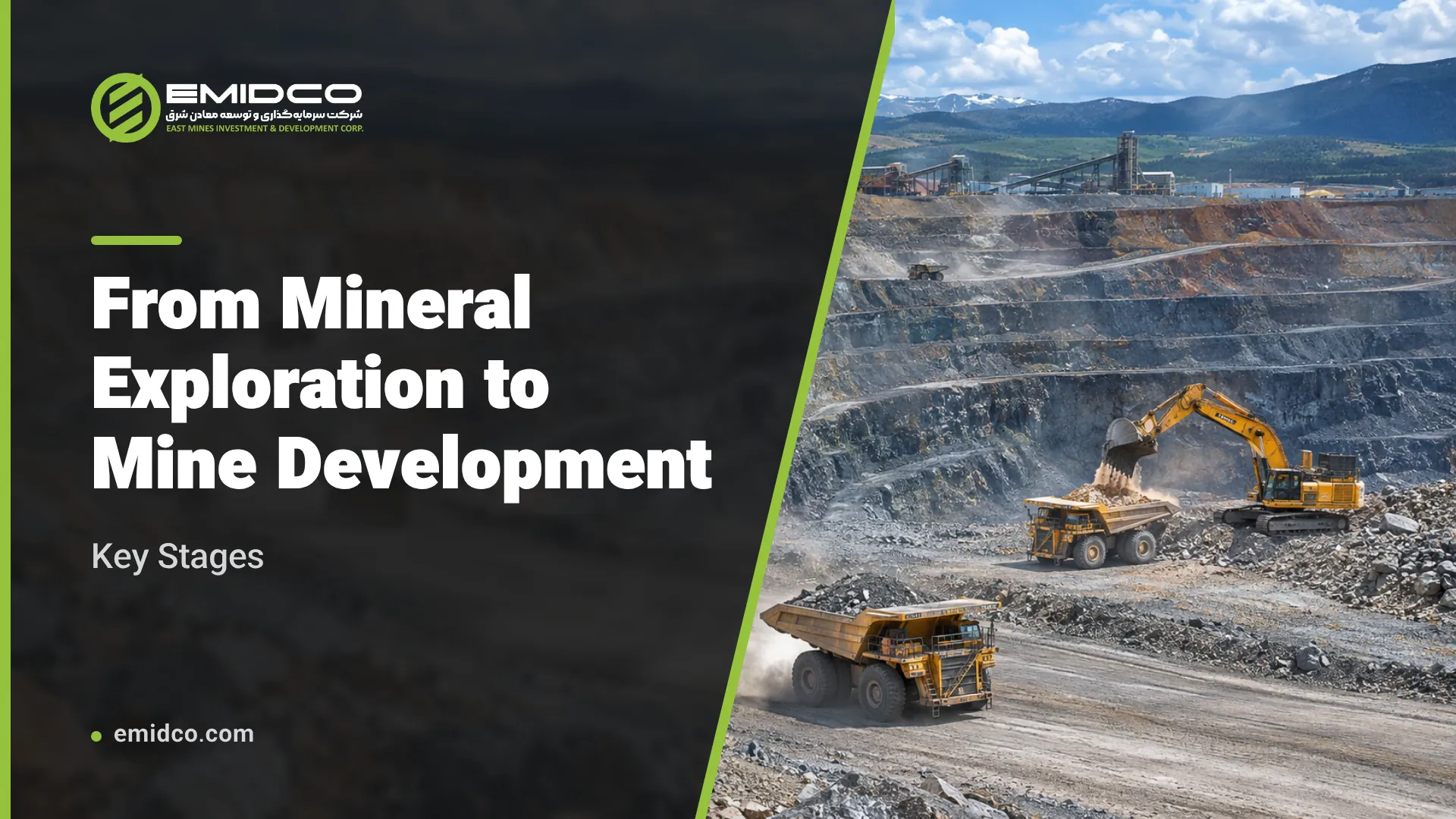
Developing a mine is a complex, long-term process that involves much more than discovering a mineral deposit. A promising geological target must pass through several stages of investigation, evaluation, planning, financing, construction, and operational development before it can become a producing mine.
Each stage helps reduce uncertainty and determine whether a mineral project can be developed safely, technically, economically, and responsibly. Many exploration projects never reach production because geological potential alone does not guarantee that a deposit can support a commercially viable mining operation.
Understanding the journey from mineral exploration to mine development helps investors, mining professionals, project developers, and other stakeholders understand how mining projects progress and what decisions shape their future.
This article provides an overview of the main stages in the mining project lifecycle, explaining how an early mineral opportunity can gradually develop into an operating mine.
What Is the Mining Project Lifecycle?
The mining project lifecycle refers to the sequence of activities involved in identifying, evaluating, developing, operating, and eventually closing a mineral project. Although the exact process varies depending on the mineral commodity, deposit characteristics, project location, regulatory environment, and investment requirements, most mining projects follow a broadly similar progression.
The lifecycle can be divided into several major stages:
- Mineral exploration and target identification
- Geological investigation and project definition
- Exploration and technical evaluation
- Mineral resource assessment
- Preliminary project evaluation
- Pre-feasibility and feasibility studies
- Mine planning and permitting
- Project financing and development decisions
- Mine construction and commissioning
- Commercial production and mine closure
These stages are not always completely separate. Some activities overlap, and projects may return to earlier stages when new information changes the technical or economic outlook.
1- Mineral Exploration and Target Identification
Mineral exploration is generally the starting point of a mining project. Its main purpose is to identify areas that may contain economically interesting mineral deposits. At this early stage, geological information is reviewed to identify locations with characteristics that could indicate mineralization. Exploration companies may investigate new areas or reassess regions where previous geological work has identified potential.
However, identifying a promising geological target does not mean that a commercially viable mineral deposit has been discovered. The objective is to determine whether further investigation is justified and whether the project has enough geological potential to proceed.
Exploration activities can involve different geological and technical approaches depending on the project. The specific methods, regional conditions, and exploration opportunities are separate subjects that require more detailed discussion.
2- Geological Investigation and Project Definition
Once an area has been identified as potentially interesting, the project moves toward a more detailed geological investigation. The purpose of this stage is to develop a clearer understanding of the geological setting and determine whether the initial exploration concept is supported by sufficient evidence.
Project teams review available geological information, organize additional investigations, and define the areas that require further attention. The results help establish the technical direction of the project and determine whether additional investment in exploration and evaluation is justified.
At this point, a mining project is still at an early stage. Its commercial potential remains uncertain, and further technical work is required before development decisions can be made.
3- Exploration and Technical Evaluation
As a project progresses, geological uncertainty must gradually be reduced. Additional technical investigations are carried out to understand the characteristics, continuity, and potential scale of the mineralization. These activities provide the information needed to evaluate whether the project deserves further development.
Exploration drilling may form part of this stage, helping project teams obtain subsurface information and improve their understanding of the deposit. However, drilling is only one component of the broader exploration process. Its role is to support geological interpretation and project evaluation rather than independently establish the commercial viability of a mine.
The results of technical investigations become important inputs for subsequent resource assessment and economic studies.
4- Mineral Resource Assessment
After sufficient geological information has been collected, the project may progress toward a formal assessment of its mineral potential. This stage helps establish whether the available geological evidence supports the identification and estimation of a mineral resource.
It is an important transition because mining companies need a more structured understanding of the mineral deposit before they can make meaningful decisions about its potential development. A mineral resource does not automatically represent material that can be mined economically. Further technical, economic, environmental, legal, and operational considerations are required.
The distinction between mineral resources and mineral reserves is therefore important throughout the mining project lifecycle. Detailed resource estimation methods, classification systems, and reporting standards form a separate technical subject and are not covered in depth in this overview.
5- Preliminary Project Evaluation
Once a project has reached a more advanced level of geological understanding, its broader development potential can be assessed. Preliminary evaluation considers whether the project may have a realistic path toward future development.
The assessment may examine:
- The general scale and characteristics of the mineral deposit
- Potential mining and processing approaches
- Infrastructure requirements
- Possible production capacity
- Initial capital and operating cost expectations
- Market conditions for the relevant mineral
- Environmental and social considerations
- Major technical and commercial risks
At this stage, estimates and assumptions may still involve considerable uncertainty. The purpose is not to approve mine construction but to determine whether further investment in more detailed studies is justified.
Projects that demonstrate sufficient potential may proceed to more advanced technical and economic evaluation.
6- Pre-Feasibility and Feasibility Studies
Pre-feasibility and feasibility studies are among the most important stages in evaluating a mining project. They examine whether a proposed mining operation can be developed under realistic technical, economic, operational, environmental, and regulatory conditions.
These studies help transform a geological opportunity into a structured development proposal.
Pre-Feasibility Study
A Pre-Feasibility Study (PFS) evaluates the main development options and determines whether the project appears sufficiently attractive to justify more detailed investigation.
It typically considers:
- Potential mining methods
- Processing requirements
- Infrastructure and logistics
- Production assumptions
- Capital expenditure
- Operating expenditure
- Environmental and permitting requirements
- Financial performance and project risks
The study helps identify the most promising development scenario and highlights areas where additional information is needed.
Feasibility Study
A Feasibility Study (FS) provides a more detailed assessment of the selected development concept. It is intended to support major investment decisions by examining the technical design, financial requirements, operating assumptions, and implementation risks of the proposed mine.
Depending on the project, the study may include detailed engineering, production planning, infrastructure design, cost estimates, environmental considerations, and financial modeling. A positive feasibility outcome does not automatically guarantee that construction will begin. The project must still address financing, permits, commercial agreements, and other conditions.
8- Mine Planning, Engineering, and Permitting
Before construction can begin, the proposed mining operation must be translated into a practical development plan. Mine planning and engineering establish how the project will be built, operated, and managed. This stage connects the technical findings of earlier studies with the practical requirements of developing a functioning mine.
Key considerations may include:
- Mine layout and infrastructure design
- Processing plant requirements
- Power and water supply
- Transportation and logistics
- Waste management facilities
- Workforce and operational planning
- Health and safety systems
- Environmental management measures
- Regulatory approvals and permits
Permitting is particularly important because mining projects operate within legal and regulatory frameworks that govern land access, environmental protection, worker safety, water use, and other activities. Requirements vary significantly between jurisdictions and project types.
A project cannot move into full development simply because its technical studies are positive. It must also satisfy the relevant regulatory and environmental requirements.
8- Project Financing and Final Investment Decision
Mine development generally requires substantial capital investment. Before construction begins, project owners must establish how the development will be funded and whether the expected returns justify the financial commitment.
Mining projects may use different financing structures, including:
- Equity investment
- Corporate financing
- Project finance
- Strategic partnerships
- Joint ventures
- Offtake agreements
- Debt financing
The appropriate financing structure depends on the project’s maturity, ownership, commodity market, risk profile, and expected financial performance.
Final Investment Decision
The Final Investment Decision (FID) is a major milestone in the development of a mining project. At this point, the project owners or investors decide whether to commit the required capital and proceed with construction.
The decision generally depends on the results of technical and economic studies, permitting progress, financing arrangements, market conditions, and the project’s overall risk profile. A project that reaches FID has moved beyond exploration and evaluation into the implementation phase.
9- Mine Construction and Infrastructure Development
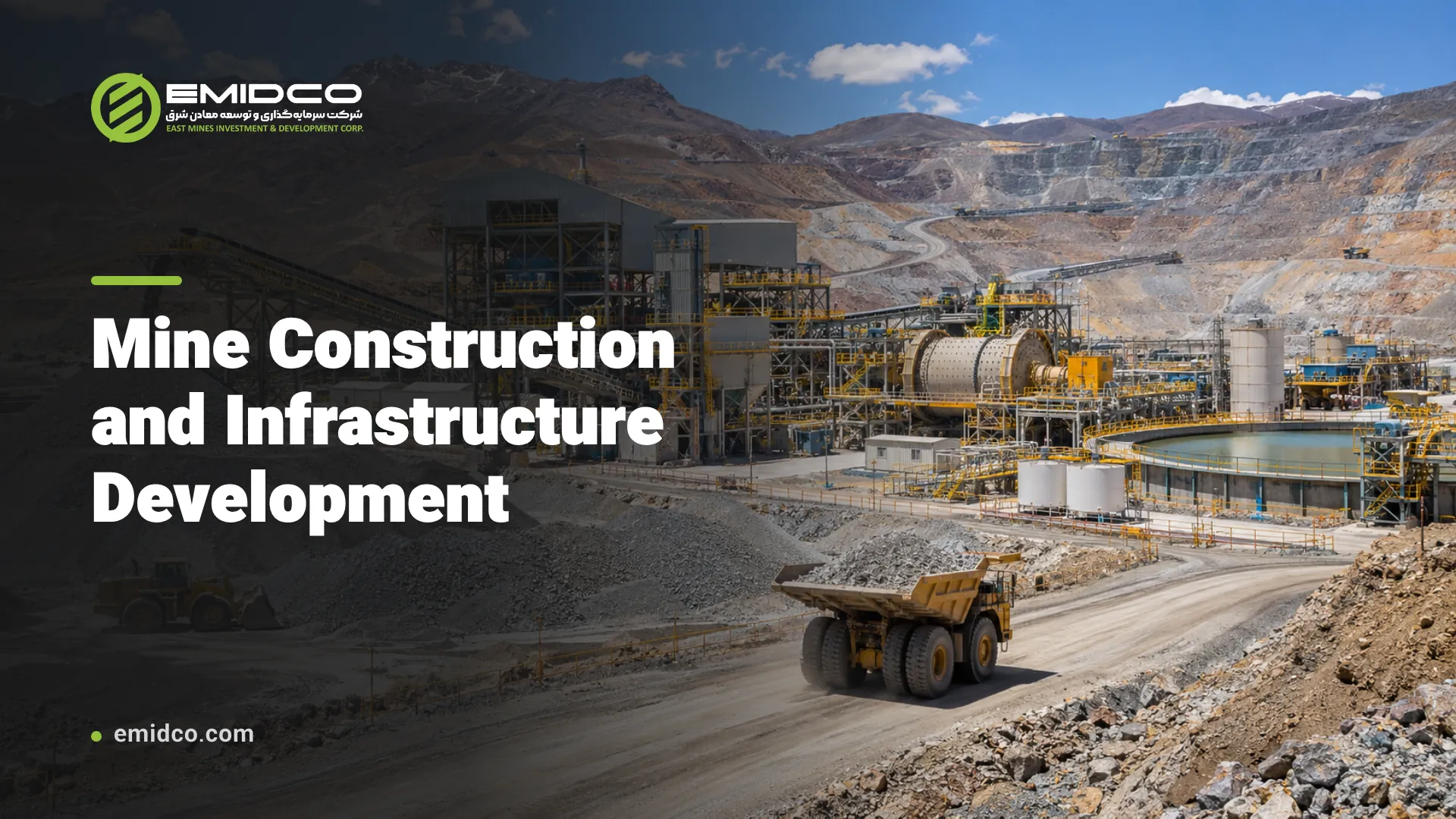
After the necessary approvals and investment decisions have been secured, construction can begin. This stage involves building the facilities and infrastructure required to operate the mine.
Depending on the project, construction may include:
- Mine access and development works
- Processing plant construction
- Roads and transportation systems
- Power supply infrastructure
- Water management systems
- Workshops and maintenance facilities
- Storage and waste management areas
- Administrative and operational buildings
Construction is often one of the most capital-intensive stages of a mining project. Project managers must coordinate engineering teams, contractors, suppliers, equipment manufacturers, and regulatory authorities to ensure that the development progresses according to the approved plan.
Delays, cost increases, supply-chain problems, and unexpected site conditions can affect project schedules and financial performance. Successful construction establishes the physical foundation for mining operations.
10- Commissioning and Operational Readiness
Completing construction does not immediately mean that a mine is ready for full commercial production. Before normal operations begin, the project’s systems and equipment must be tested and prepared for use.
This process is known as commissioning. Commissioning helps confirm that individual systems and integrated facilities operate according to their design requirements.
It may involve:
- Equipment testing
- Process plant testing
- Power and utility verification
- Safety system checks
- Operational procedures
- Workforce training
- Maintenance preparation
- Initial production testing
The objective is to identify problems before the operation moves into regular production. Once commissioning activities are sufficiently complete, the mine can begin its transition toward commercial operation.
11- Commercial Production and Mine Operation
Commercial production represents a major achievement in the mining project lifecycle. At this stage, the mine begins operating as a business, extracting and processing mineral material to produce a saleable product.
However, reaching production does not mean that all operational challenges have been resolved. Mining companies must continuously manage production performance, equipment reliability, workforce requirements, operating costs, product quality, safety, and environmental responsibilities.
Important operational priorities include:
- Maintaining production targets
- Improving equipment availability
- Managing operating costs
- Ensuring consistent product quality
- Monitoring worker health and safety
- Managing environmental impacts
- Maintaining regulatory compliance
- Planning future mine development
Many mines also experience a ramp-up period after commissioning. During this time, production gradually increases as operational teams improve performance and resolve initial issues. Long-term success depends on maintaining a balance between productivity, cost control, safety, environmental responsibility, and the remaining economic life of the deposit.
12- Environmental Management and Mine Closure
Environmental responsibility is not limited to the final stage of mining. It should be considered throughout the entire project lifecycle.
Mining companies are expected to identify potential environmental impacts, establish management plans, monitor performance, and implement appropriate control measures.
These responsibilities may involve:
- Water management
- Waste rock and tailings management
- Dust and emissions control
- Land disturbance management
- Biodiversity protection
- Rehabilitation planning
- Community engagement
- Environmental monitoring
Mine Closure
Every mining operation eventually reaches the end of its productive life. Mine closure involves preparing the site for its post-mining condition and addressing the environmental, physical, and social responsibilities associated with ending operations.
Closure planning may include:
- Removing or securing infrastructure
- Stabilizing disturbed areas
- Managing remaining waste facilities
- Rehabilitating land
- Monitoring environmental conditions
- Addressing long-term site risks
- Supporting agreed post-mining land uses
Responsible closure planning should begin early in the project lifecycle rather than being postponed until production ends. This approach allows mining companies to consider closure costs and environmental responsibilities when making earlier development decisions.
How Long Does It Take to Develop a Mine?
The time required to develop a mine varies considerably. Some projects may progress relatively quickly, while others require many years of exploration, evaluation, permitting, financing, and construction.
The overall timeline depends on several factors:
- Geological complexity
- Mineral deposit characteristics
- Project size and production capacity
- Availability of infrastructure
- Environmental and regulatory requirements
- Access to financing
- Commodity market conditions
- Technical challenges
- Community and stakeholder considerations
Timeline of the Main Stages of Mine Development
The following table provides a general overview of the relative duration and focus of major project stages. These are indicative descriptions, not fixed industry timelines.
| Project stage | Main objective | General time consideration |
|---|---|---|
| Early exploration | Identify and investigate mineral potential | Highly variable |
| Project evaluation | Assess technical and economic potential | Depends on project maturity |
| Pre-feasibility and feasibility | Evaluate development options and viability | Often requires substantial study time |
| Permitting and financing | Secure approvals and investment | Varies by jurisdiction and project |
| Construction | Build the mine and supporting facilities | Depends on scale and complexity |
| Commissioning and ramp-up | Prepare the operation for commercial production | Depends on operational readiness |
| Production | Extract and process mineral material | Depends on the mine plan and deposit |
| Closure and rehabilitation | Manage the end of mining operations | May continue for years after production |
There is no universal schedule for mine development. A project’s timeline should be evaluated based on its individual technical, financial, environmental, and regulatory conditions.
Why Do Some Mineral Exploration Projects Never Become Operating Mines?
Discovering mineralization is only the beginning of the mining development process. Many exploration projects do not advance to construction or commercial production because they fail to meet one or more essential development requirements.
Common reasons include:
1- Insufficient mineral potential
The results of further investigation may show that the deposit does not contain enough economically interesting mineralization to support development.
2- Technical challenges
Some deposits may be difficult or expensive to extract and process because of their geological or physical characteristics.
3- Unfavorable economics
High capital costs, operating expenses, low commodity prices, or changes in market conditions can make a project financially unattractive.
4- Infrastructure limitations
A project may be located far from roads, power supplies, water resources, processing facilities, or transportation networks.
5- Environmental and permitting constraints
Environmental risks, land-use restrictions, regulatory requirements, or unresolved stakeholder concerns may delay or prevent development.
6- Financing difficulties
Even technically promising projects may struggle to secure the capital required for construction.
7- Changes in market conditions
Commodity prices, demand, financing costs, and global economic conditions can change significantly during the long development process. These factors demonstrate why mining companies must evaluate projects through multiple stages rather than relying on geological potential alone.
What Determines the Success of a Mining Development Project?
A successful mining project requires more than a valuable mineral deposit. Its long-term performance depends on the relationship between geological, technical, economic, environmental, regulatory, and operational factors.
Key Factors Influencing Mining Project Success
Some of the most important success factors include:
- Reliable geological information
- Appropriate project evaluation
- Realistic technical and financial assumptions
- Effective engineering and mine planning
- Access to sufficient capital
- Timely regulatory approvals
- Suitable infrastructure
- Strong project management
- Skilled operational teams
- Responsible environmental practices
- Constructive relationships with local communities
These factors are interconnected. A weakness in one area can affect the entire project and change its development prospects. For this reason, mining companies use a staged approach to evaluate risks, make investment decisions, and allocate capital as the project becomes more advanced.
Conclusion
The journey from mineral exploration to mine development is a staged process that transforms an early geological opportunity into a potential mining operation. Each stage plays a different role in reducing uncertainty, evaluating project potential, securing investment, preparing infrastructure, and establishing safe and responsible production.
Mineral exploration provides the starting point, but successful mine development depends on much more than discovering a mineral deposit. Technical feasibility, economic performance, financing, regulatory approvals, environmental management, and operational readiness all contribute to the final outcome.
Understanding the mining project lifecycle provides a clearer picture of how mineral projects progress, why some reach production while others do not, and what is required to develop a mine responsibly and successfully.
FAQ
What is the difference between mineral exploration and mine development?
Mineral exploration focuses on identifying and investigating potential mineral deposits. Mine development involves the later activities required to prepare, finance, construct, and establish a mining operation. Exploration helps determine whether a mineral opportunity deserves further investigation, while development turns a sufficiently evaluated project into an operating mine.
What are the main stages of a mining project?
The main stages generally include mineral exploration, geological investigation, technical evaluation, resource assessment, preliminary studies, feasibility studies, permitting, financing, construction, commissioning, production, and closure. The exact sequence and level of detail vary depending on the project.
Does discovering a mineral deposit mean a mine can be built?
No. A mineral discovery does not automatically establish that a mine is economically or technically viable. Further geological, engineering, economic, environmental, and regulatory evaluations are necessary before a development decision can be made.
What is a feasibility study in mining?
A feasibility study is a detailed technical and economic assessment of a proposed mining project. It evaluates whether the selected development plan can be implemented under realistic conditions and provides important information for investment decisions.
Why is mine construction not started immediately after exploration?
Exploration results alone are not sufficient to justify the substantial investment required for mine construction. A project must undergo additional technical and economic evaluation, obtain necessary permits, secure financing, and establish a practical development plan.
What is the Final Investment Decision in mining?
The Final Investment Decision is the formal decision by project owners or investors to commit the required capital and proceed with project development. It generally follows the completion of major technical and commercial evaluations and consideration of key project risks.
What happens after mine construction is completed?
After construction, the project enters commissioning and operational readiness activities. Equipment and systems are tested, operational procedures are established, and the mine prepares to begin production. Production may then increase gradually during the ramp-up period.
How long does it take to develop a mine?
There is no fixed development period. The timeline depends on the project’s size, geological complexity, infrastructure, regulatory requirements, financing, construction needs, and other conditions. Large or technically complex projects may require many years to progress from initial exploration to commercial production.
Why is environmental management important throughout the mining lifecycle?
Environmental management helps identify, prevent, and control the impacts of mining activities. It also supports regulatory compliance, responsible resource development, rehabilitation planning, and the long-term management of mining sites.
Does every mineral exploration project become a producing mine?
No. Many projects stop during exploration or evaluation because of geological uncertainty, technical difficulties, unfavorable economics, environmental constraints, permitting issues, or insufficient financing. Only projects that satisfy the necessary development requirements can progress toward commercial production.